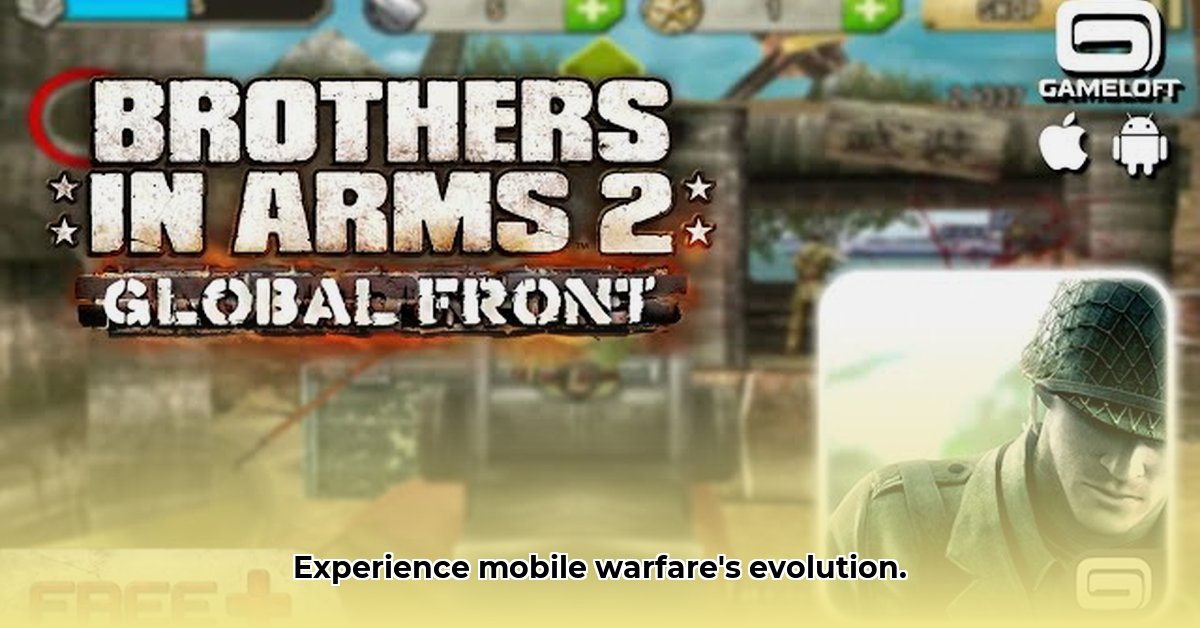
Brothers in Arms 2: Global Front wasn't just another World War II game; it was a pioneering attempt to bring console-quality tactical shooting to mobile devices in the early 2010s. This review examines its journey, from its initial paid release to its freemium transformation, exploring how this shift impacted its reception and legacy. We'll analyze the gameplay, narrative, historical context, and monetization strategies, revealing both its successes and compromises.
Gameplay and Immersion: A Touchscreen Battlefield
Imagine experiencing the intensity of WWII combat on your phone. That was the promise of Brothers in Arms 2, and for a time, it delivered. The game cleverly adapted the series' tactical combat to touchscreens, a bold move in early mobile gaming. You felt the weight of decisions directing your squad, and the atmosphere was immersive. However, the touch controls, while innovative, were sometimes clunky, leading to frustrating moments. The original paid version felt more polished and complete; the freemium version, while more accessible, lost some depth. For example, the refined cover system, a key element of tactical gameplay in the original, was significantly simplified in the freemium iteration. This change, coupled with the removal of the fluid running mechanic, diminished the strategic depth and overall tactical experience. Did this compromise impact player satisfaction? Early reviews suggest it did.
Narrative and Story: A War Story Retold
Brothers in Arms 2 offered a gripping, linear story focused on a personal tale within the broader war. This focused narrative distinguished it from the wider Brothers in Arms universe. However, the freemium version introduced a different ending. This alteration is divisive; some argue it diminished player agency, altering the impactful conclusion of the original. The original's storyline proved emotionally resonant, providing a satisfying conclusion that resonated deeply. By contrast, the freemium version’s altered ending felt rushed and less impactful, diminishing the narrative's overall weight. How did this narrative shift impact long-term player engagement? Further research is needed to fully determine its effect.
Historical Context: A Mobile Revolution
Released when mobile gaming was nascent, Brothers in Arms 2 played a crucial role in its evolution. Its innovative approach to touch controls, drawing inspiration from contemporaneous titles like Modern Combat, paved the way for future mobile first-person shooters (FPS). It successfully demonstrated that console-level gameplay could be adapted for mobile devices, albeit with adjustments. This bold move established it as a touchstone in mobile gaming history, pushing the boundaries of what mobile devices could achieve. It left a legacy, influencing subsequent developers and helping shape the genre.
Monetization and Legacy: A Double-Edged Sword
The transition to a freemium model, while broadening accessibility, presents a complex legacy. While more people experienced the game, it altered the core experience. The pursuit of maximizing profits through in-app purchases and microtransactions resulted in the removal of several key features. Did this sacrifice of core gameplay elements outweigh the benefits of increased accessibility? This remains debatable. While it likely extended the game's lifespan, some argue that it altered the game to the point of diminishing its overall impact. The original, paid version remains fondly remembered by many as a superior gaming experience. This raises a critical question: did the freemium model ultimately benefit the game's long-term success or damage its legacy?
A Comparative Look at Versions:
| Feature | Original (Paid) | Freemium Version |
|---|---|---|
| Cover System | Robust, integral to tactical gameplay | Removed or significantly simplified |
| Running | Smooth, fluid movement | Removed |
| Monetization | One-time purchase, complete experience | In-app purchases, free-to-play model with microtransactions |
| Ending | More conclusive and emotionally resonant | Altered, potentially less satisfying and impactful |
| Overall Experience | Polished, complete, tactical gameplay | Compromised in places for monetization, altered core gameplay |
Brothers in Arms 2’s initial success proved the appetite for a high-quality tactical shooter on mobile. Yet, the path to broader accessibility dramatically altered the game's experience. The freemium model, while increasing its reach, changed its design, affecting its reception and solidifying differing perspectives on its success. The debate about the freemium transition's overall benefit continues within gaming circles.
How Did Brothers in Arms 2: Global Front's Freemium Transition Impact Player Retention?
Key Takeaways:
- The expansion to 52 missions increased playtime, initially boosting player engagement.
- New weapons and a leveling system added depth, but introduced potential pay-to-win elements.
- Negative player feedback centered on gameplay alterations and aggressive monetization. This directly impacted player retention.
- The freemium model's long-term impact on player retention remains uncertain, balancing accessibility against alienating the original fanbase.
- The game's freemium transition highlights the challenges of balancing monetization with preserving a game's integrity.
The transition to a freemium model was a double-edged sword for Brothers in Arms 2. While it expanded the player base, it also introduced potential problems impacting the original player's experience and engagement. The addition of microtransactions and alterations to the core gameplay mechanics potentially alienated existing players. The long term effect on retention remains a subject of ongoing discussion among game analysts.
⭐⭐⭐⭐☆ (4.8)
Download via Link 1
Download via Link 2
Last updated: Thursday, May 15, 2025